
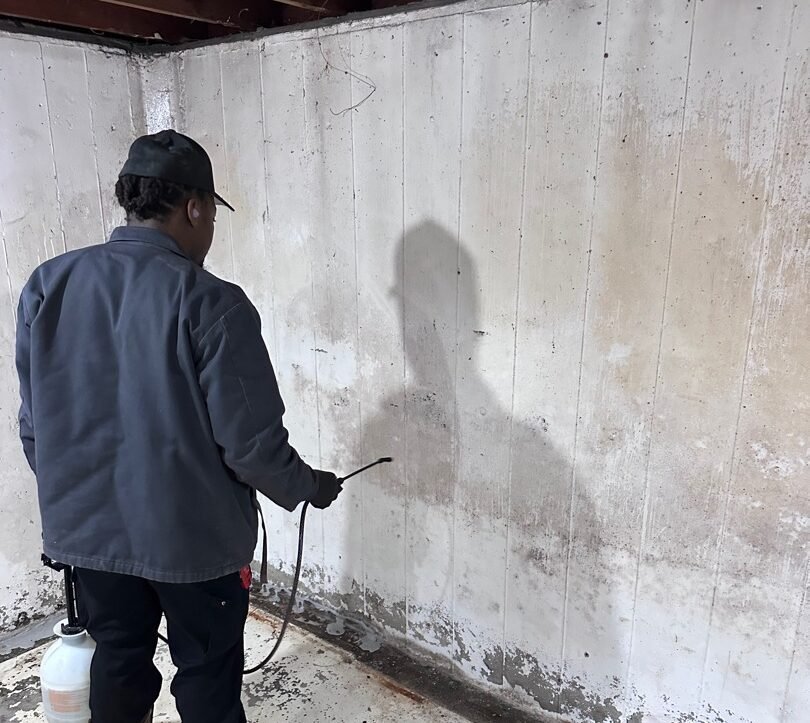
Mold damage in a commercial building can quickly become more than a maintenance issue. For property owners, facility managers, landlords, and business owners, it can affect building materials, indoor conditions, tenant concerns, employee comfort, and everyday operations. What may begin as a small roof leak, plumbing failure, or damp area behind a wall can become a much larger restoration project when moisture remains unnoticed.
Commercial mold damage restoration is not simply about cleaning a visible spot from a wall. Effective remediation starts by determining where the moisture came from, understanding how far the damage extends, controlling the affected area, removing or cleaning damaged materials as appropriate, and making sure the structure is properly dried.
At St. Louis Cleaning and Restoration, we have provided cleaning and restoration services for St. Louis families, businesses, and corporations since 1991. Our restoration services include mold remediation, water damage restoration, fire damage restoration, and 24/7 emergency response throughout the St. Louis metropolitan area.
For commercial property owners dealing with mold or recent water damage, understanding the restoration process can make it much easier to determine what should happen next.
What Causes Mold Damage in St. Louis Commercial Buildings?
Mold requires moisture to grow, which means a mold problem inside a commercial property is often a sign of another building problem that needs attention.
The Missouri Department of Health and Senior Services describes indoor mold growth as a symptom of a water problem. The agency notes that mold can grow where sufficient moisture combines with organic materials such as wood, paper, drywall, carpeting, and other common building components.
In commercial properties around St. Louis, some of the most common sources of moisture include roof leaks, plumbing problems, HVAC condensation, storm damage, flooding, sprinkler system discharges, and exterior water intrusion.
Roof Leaks and Building Envelope Problems
Commercial roofs cover large surface areas and contain numerous seams, penetrations, drains, flashing points, and mechanical connections. Damage to any of these areas can allow water into ceiling systems and wall assemblies.
A small leak can be especially difficult to identify because water may travel along structural components before finally becoming visible. By the time staining appears on a ceiling tile, moisture may already have affected insulation, drywall, framing, or materials above the suspended ceiling.
Windows, exterior walls, failed seals, and other parts of the building envelope can create similar problems.
Plumbing Leaks and Pipe Failures
Commercial buildings frequently contain extensive plumbing systems running above ceilings, behind walls, through utility areas, and between multiple floors.
A burst pipe can create obvious damage immediately, but slow leaks can sometimes cause greater hidden mold problems because they remain undetected.
Common sources include:
- Supply line leaks
- Drain leaks
- Restroom plumbing
- Break-room plumbing
- Water heaters
- Mechanical equipment
- Plumbing stacks in multi-story buildings
If the affected materials remain damp, mold can begin developing in areas that are not visible from the occupied portion of the building.
HVAC Condensation and Humidity Problems
Heating and cooling systems can also contribute to commercial moisture problems.
Condensation around ductwork, clogged condensate drains, poorly maintained drip pans, excessive humidity, and mechanical system problems can create damp conditions around ceilings, walls, equipment rooms, and other concealed spaces.
The EPA recommends keeping HVAC drip pans clean and unobstructed, correcting condensation problems, maintaining building and HVAC systems, and keeping indoor relative humidity below 60 percent, ideally between approximately 30 and 50 percent when possible.
Flooding and Major Water Intrusions
Storms, groundwater intrusion, roof failures, broken pipes, sprinkler systems, and other sudden events can introduce large amounts of water into a commercial property.
When that happens, water extraction is only one part of the response. Flooring systems, drywall, insulation, wall cavities, furniture, ceilings, and structural materials may also need to be evaluated and dried.
This is one reason commercial water damage restoration and mold remediation are closely connected.
Why Fast Response Matters After Commercial Water Damage
When a commercial property experiences water damage, time matters.
EPA guidance for schools and commercial buildings recommends taking action to dry water-damaged materials within approximately 24 to 48 hours when possible. This is intended to reduce the likelihood that mold growth will develop. The EPA also makes an important distinction: 48 hours is a general guideline, not a guaranteed deadline. Mold may develop sooner under some conditions, and wet materials do not automatically develop mold after exactly 48 hours.
For business owners, this means visible standing water should not be the only concern.
Moisture can move underneath flooring, into wall cavities, behind baseboards, above ceilings, and into insulation. Materials that appear dry from the surface can sometimes remain wet underneath.
A commercial restoration response may therefore involve:
- Water extraction
- Moisture evaluation
- Structural drying
- Removal of unsalvageable materials
- Dehumidification
- Monitoring of affected areas
- Investigation of concealed spaces
- Mold remediation when contamination has already developed
Our restoration response teams are available 24 hours a day, seven days a week for emergencies because reducing the amount of time water remains inside the structure can help limit additional damage.
Signs a Commercial Property May Have a Mold Problem
Mold problems are not always immediately obvious.
Visible growth is certainly one warning sign, but businesses should also pay attention to changes in the building that could indicate hidden moisture.
Visible Mold Growth
Discoloration or unusual growth may appear on:
- Drywall
- Ceiling tiles
- Wood
- Insulation
- Concrete
- Flooring
- Cabinetry
- Areas surrounding windows or plumbing
The appearance can vary considerably, which is why color alone should not be used to determine the seriousness or type of mold present.
Persistent Musty Odors
A persistent musty smell can indicate moisture or microbial growth even when nothing is immediately visible.
This may occur inside wall cavities, beneath carpeting, behind cabinets, above suspended ceilings, or near mechanical systems.
Recurring Water Stains
Water stains that repeatedly return deserve attention.
Bubbling paint, soft drywall, sagging ceiling tiles, warped flooring, damp carpeting, or discoloration around walls can all indicate an unresolved water source.
Recent Water Damage
Any substantial water event increases the importance of monitoring affected materials afterward.
A burst pipe, roof leak, sprinkler discharge, flooding event, or HVAC leak may leave moisture behind even after the obvious water has been removed.
Commercial Mold Damage Can Extend Beyond What You See
One of the difficulties with mold restoration is determining the actual extent of the problem.
The EPA specifically notes that mold can be concealed behind building materials. Its commercial-building guidance even illustrates a wallboard example where the exposed side appears normal while the backside contains significant mold growth.
Commercial buildings can make this investigation more complicated because they often contain extensive ceiling cavities, wall assemblies, HVAC systems, plumbing networks, tenant spaces, storage areas, and mechanical rooms.
A visible patch of mold should therefore be considered in the context of the moisture source and surrounding materials.
How Professional Commercial Mold Remediation Works
No two commercial mold projects are exactly alike. The appropriate approach depends on the size of the affected area, the materials involved, the moisture source, building configuration, occupancy, HVAC conditions, and other project-specific factors.
However, professional remediation generally follows several important stages.
1. Initial Inspection and Damage Assessment
Before removing materials, the affected area needs to be evaluated.
The objective is to understand:
- Where moisture originated
- What materials have been affected
- How far visible or suspected contamination extends
- Whether moisture remains present
- Whether contamination may exist behind surfaces
- Whether portions of the building should be isolated
Our mold remediation work includes determining the scope of the damage and developing an assessment and action plan for safe removal. We also use HEPA filtration equipment when treating and abating microbial contamination.
The EPA similarly recommends evaluating the size of the mold or moisture problem and the type of damaged materials before creating the remediation plan.
2. Find and Correct the Moisture Source
Removing mold without correcting the water problem does not solve the underlying issue.
If water continues entering the building, conditions that allowed mold to grow remain in place.
Depending on the property, correcting the source might involve addressing:
- Plumbing leaks
- Roof damage
- Exterior water intrusion
- Condensation
- Drainage problems
- HVAC issues
- Excess indoor humidity
Missouri DHSS summarizes this principle simply: controlling moisture is essential to controlling mold.
3. Establish Appropriate Containment
Mold remediation can disturb contaminated materials. For larger or more complicated projects, isolating the work area helps reduce the movement of particles and debris into unaffected areas.
The amount and type of containment should be based on the conditions of the project rather than using the exact same setup for every building.
EPA commercial remediation guidance discusses limited and full containment approaches depending on factors such as the amount of affected material and the likelihood that remediation activities could contaminate adjoining occupied areas.
This can be particularly important in office buildings, schools, apartment complexes, medical facilities, retail centers, and other properties where unaffected sections of the building may still be occupied.
4. HEPA Filtration and Air Management
HEPA filtration plays an important role in many professional remediation projects.
The EPA recommends HEPA vacuuming for final cleanup of remediation areas after contaminated materials have been removed and affected materials have been dried. It also discusses HEPA-filtered equipment as part of containment and negative-pressure strategies for appropriate projects.
At St. Louis Cleaning and Restoration, HEPA filtration equipment is part of our capabilities for treating and abating microbial contamination.
The purpose is not simply to cover up an odor. Proper remediation focuses on physically addressing contamination and moisture.
5. Remove Materials That Cannot Be Properly Restored
Not every mold-affected material can or should be saved.
Porous materials can be particularly difficult because moisture and contamination may penetrate beyond the surface.
Depending on the extent and condition of the material, removal may be necessary for items such as:
- Drywall
- Ceiling tiles
- Insulation
- Carpet or carpet backing
- Certain composite materials
- Other heavily affected porous building products
EPA guidance notes that porous materials with mold growth can sometimes be difficult or impossible to completely clean and may need to be discarded.
The decision should be based on the actual project rather than assuming that every affected material automatically needs demolition.
6. Clean Salvageable Materials
Some structural materials and surfaces can potentially be cleaned and retained.
Depending on the circumstances, these may include certain hard surfaces, framing, concrete, metal, and other appropriate materials.
Professional mold remediation is not simply a matter of spraying chemicals over visible mold. Physical cleaning, removal of contaminated debris, moisture correction, drying, and proper handling of affected materials are all important parts of the process.
7. Dry the Structure
Removing visibly affected materials does not eliminate the need for drying.
Moisture remaining beneath flooring, inside wall cavities, within structural components, or around mechanical equipment can allow the original problem to return.
Drying and moisture control may involve specialized equipment, dehumidification, airflow management, and continued moisture monitoring depending on the loss.
The goal is to correct the conditions that supported mold growth before repairs conceal the affected area again.
8. Evaluate the Remediated Area and Plan Restoration
After remediation work is completed, the project should be evaluated before reconstruction proceeds.
This may include confirming that the moisture source has been corrected, ensuring materials have been adequately cleaned or removed, checking drying progress, and determining what needs to be rebuilt or replaced.
The ANSI/IICRC S520 Standard for Professional Mold Remediation covers mold remediation in residential, commercial, and institutional buildings. The standard addresses areas including inspection, structural remediation, HVAC remediation, contents, documentation, safety, and post-remediation verification.
Why HEPA Filtration Matters During Mold Remediation
Mold remediation often involves disturbing contaminated materials.
Cutting drywall, removing ceiling materials, taking out insulation, or cleaning structural surfaces can release particles and settled debris into the work area.
HEPA filtration can help capture very small airborne particles rather than simply allowing them to circulate throughout the building.
Containment and filtration become especially important in commercial facilities where remediation may be taking place next to occupied offices, retail spaces, hallways, tenant suites, or other active portions of the property.
Our commercial cleaning capabilities also include air duct cleaning and decontamination. Our equipment uses HEPA filtration to capture extracted contaminants rather than redistributing them throughout the commercial facility.
Duct cleaning is not automatically necessary for every mold project, but HVAC systems should be considered when mold or water damage has affected areas near air-handling equipment or ductwork.
Commercial Properties That Can Experience Mold Damage
Mold can affect virtually any type of commercial property.
Office Buildings
Offices can develop moisture problems from roof leaks, plumbing, exterior walls, HVAC condensation, or water accumulating above suspended ceilings.
Because much of an office building’s infrastructure is concealed, leaks may sometimes remain unnoticed until staining, odors, or visible damage appear.
Retail Stores and Shopping Centers
Shopping centers introduce additional complexity because multiple businesses can share roofs, walls, plumbing systems, and mechanical areas.
A water problem affecting one tenant can sometimes migrate into another space.
Warehouses and Industrial Facilities
Large roof systems, loading areas, utility lines, mechanical equipment, and temperature differences can all contribute to moisture problems in warehouses and industrial buildings.
Large square footage can also make identifying the full extent of water migration more challenging.
Apartments and Multi-Tenant Properties
Water can travel vertically and horizontally through multi-unit buildings.
A plumbing failure in an upper unit might affect ceilings, walls, flooring, and common areas below.
Fast assessment can be particularly valuable when multiple tenants or occupied spaces are involved.
Schools and Institutional Buildings
Schools and institutional facilities frequently have extensive HVAC systems, plumbing networks, kitchens, bathrooms, and high-occupancy spaces.
Planning remediation carefully can help separate affected work areas from portions of the property that remain in use.
Restaurants and Commercial Kitchens
Restaurants regularly use large quantities of water and often contain extensive plumbing, refrigeration equipment, roof penetrations, drains, and ventilation systems.
Leaks or condensation hidden behind equipment can create ongoing moisture problems if they are not detected.
Mold Remediation After Commercial Water Damage
Water damage and mold remediation often overlap.
A broken pipe may initially be treated as a water extraction project, but the restoration team still needs to consider whether water traveled underneath flooring, entered wall cavities, affected insulation, or reached other concealed materials.
This is why drying the structure is such an important part of commercial water restoration.
At St. Louis Cleaning and Restoration, our restoration services include both water damage remediation and mold remediation. We use professional restoration methods to remove water from affected surfaces, areas, and materials while addressing mold contamination when it is part of the loss.
Having those services available together can be particularly useful when a water emergency develops into a broader restoration project.
Mold Problems Following Commercial Fire Damage
Water damage may also be part of a fire restoration project.
Fire suppression can introduce substantial quantities of water into a structure. Once the immediate fire emergency is over, the property may need to address several different forms of damage at the same time, including:
- Fire damage
- Smoke and soot
- Water damage
- Damp building materials
- Potential microbial growth if moisture remains
Our restoration services include fire damage, water damage, and mold remediation, allowing different portions of a complex restoration project to be addressed as part of the overall recovery process.
Does Commercial Mold Always Need to Be Tested?
Not necessarily.
The Missouri Department of Health and Senior Services states that when visible mold growth is present, sampling is generally unnecessary in most cases. The department notes that mold exists naturally in the environment, testing does not by itself determine health risk, and there are no Missouri or federal standards establishing a universally acceptable indoor mold concentration.
That does not mean testing is never useful.
Some commercial projects may benefit from evaluation by an independent indoor environmental professional, particularly when the situation is complicated, the source or extent is disputed, sensitive occupants or operations are involved, or post-remediation verification has been specified.
The appropriate approach depends on the circumstances of the building and project.
What About “Black Mold”?
Color alone should not determine how mold damage is handled.
Missouri DHSS explains that many molds can appear black and that describing one particular mold as “toxic mold” can be misleading. The practical concern in a commercial building is addressing the moisture problem and properly remediating the affected materials rather than attempting to judge risk solely by appearance.
For a property owner, a more useful set of questions is:
- Where is the moisture coming from?
- How much of the building is affected?
- What materials are involved?
- Is mold hidden behind surfaces?
- Can affected materials be cleaned and dried?
- Does anything need to be removed?
- How can the problem be prevented from returning?
Can a Business Stay Open During Mold Remediation?
Sometimes, but not always.
Whether a commercial property can remain operational depends on factors such as the size and location of the affected area, building use, containment requirements, HVAC configuration, and whether occupants can be safely separated from the work.
A relatively isolated problem may allow unaffected portions of a facility to continue operating. A widespread problem affecting shared air systems, corridors, or large portions of the building may require greater restrictions.
EPA commercial-building guidance recommends communicating with building occupants as appropriate and planning containment around both the remediation workers and occupants.
For commercial projects, scheduling and planning can be almost as important as the physical remediation work itself.
Reducing Business Downtime During Mold Restoration
Business interruption can become one of the largest concerns for a commercial property owner.
While no responsible restoration company should promise that every mold project can be completed without interruption, careful planning can help minimize unnecessary downtime.
That may involve:
- Evaluating the affected area quickly
- Creating clearly defined work zones
- Isolating remediation areas when appropriate
- Coordinating with property managers
- Correcting water sources early
- Scheduling work around operations when practical
- Addressing drying and remediation together
- Maintaining communication as conditions change
If unexpected contamination is discovered behind walls or above ceilings, the remediation plan may need to change. The EPA specifically recommends reevaluating the plan when hidden mold is discovered.
Why Commercial Restoration Experience Matters
Commercial mold damage can involve much more than removing damaged drywall.
Large properties can have complex mechanical systems, extensive plumbing, expensive flooring and furnishings, occupied tenant spaces, specialized equipment, and operational requirements that need to be considered throughout restoration.
Experience across multiple restoration disciplines becomes especially useful when mold resulted from another disaster.
St. Louis Cleaning and Restoration is a local, family-owned company that has served St. Louis families, businesses, and corporations since 1991. We emphasize technician training and certification along with professional equipment and restoration practices.
Our broader commercial capabilities include:
- Mold remediation
- Water damage restoration
- Fire damage restoration
- 24/7 emergency response
- Commercial air duct cleaning and decontamination
- Commercial carpet cleaning
- Upholstery cleaning
- Hard surface cleaning
- Kitchen hood and exhaust cleaning
- Commercial dryer vent cleaning
Having experience across restoration and commercial cleaning becomes useful when a property needs more than one service to return to normal operations.
Preventing Mold From Returning After Restoration
A successful mold remediation project should address why the mold developed in the first place.
Once restoration is complete, building owners and facility managers can reduce the likelihood of another problem by focusing on moisture management.
Repair Leaks Promptly
Roof, plumbing, window, and exterior wall leaks should be repaired rather than repeatedly cleaning up the resulting water.
Control Indoor Humidity
The EPA recommends maintaining indoor relative humidity below 60 percent and, when practical, between approximately 30 and 50 percent.
Maintain HVAC Equipment
Regular maintenance should include checking condensate drains, drip pans, mechanical rooms, ductwork, and other areas where condensation or moisture may develop.
Monitor Areas With Previous Water Damage
Spaces that have leaked before deserve extra attention.
Watch areas around:
- Exterior walls
- Roof penetrations
- Mechanical rooms
- Restrooms
- Plumbing
- Basements
- Previously damaged ceilings
- Previously wet flooring
Act Quickly When New Water Damage Occurs
The sooner wet building materials are evaluated, extracted, and dried, the more opportunities there are to limit additional damage.
EPA guidance continues to use approximately 24 to 48 hours as an important response window for drying many wet materials when conditions permit.
Frequently Asked Questions About Commercial Mold Damage Restoration in St. Louis
How quickly can mold develop after water damage?
There is no exact universal deadline. EPA guidance recommends drying wet materials within approximately 24 to 48 hours to help prevent mold growth, but it also explains that mold can sometimes develop within that timeframe and does not automatically appear at the 48-hour mark. US EPA
The practical approach is to begin water removal and drying as quickly as possible.
Can mold grow behind drywall without being visible?
Yes. Moisture can enter wall cavities from plumbing, roof leaks, exterior water intrusion, condensation, or flooding. The exposed surface may sometimes look relatively normal even when the backside of the drywall or materials inside the wall are affected.
Does moldy drywall always have to be removed?
Not automatically. The decision depends on the condition of the material, the extent of mold growth, how long it remained wet, and whether it can be effectively cleaned and dried.
Porous materials that are substantially affected are more likely to require removal than hard, nonporous surfaces.
Can mold affect commercial HVAC systems?
It can. Mold contamination or water damage near air handlers, ductwork, ceiling plenums, or mechanical systems should be evaluated as part of the project.
The IICRC S520 standard specifically includes HVAC remediation among the subjects addressed in professional mold remediation.
Can mold remediation happen while our business stays open?
Possibly. It depends on where the problem is located, the extent of contamination, the type of building, HVAC configuration, and whether the affected area can be properly isolated.
A site-specific assessment is the best way to determine what is practical.
What is the difference between mold removal and mold remediation?
“Removal” can sound like simply eliminating visible mold.
Remediation is broader. It focuses on identifying the moisture problem, determining the scope of contamination, controlling the work area, cleaning or removing affected materials, drying the structure, and taking appropriate steps to prevent the same conditions from continuing.
Does commercial mold remediation include water damage restoration?
The two services frequently overlap, particularly when mold developed following a plumbing leak, roof leak, flood, sprinkler discharge, or another water event.
We provide both commercial water damage restoration and mold remediation, allowing us to address the water loss along with related microbial contamination when both are present.
When should a commercial property owner call a mold remediation company?
Professional evaluation is particularly worth considering when there is significant visible growth, recurring mold, extensive water damage, suspected contamination behind building materials, potential HVAC involvement, or uncertainty about how widespread the problem may be.
Missouri DHSS also recommends seeking knowledgeable, experienced assistance when property owners are unsure how to handle a mold problem.
Commercial Mold Damage Restoration in St. Louis, MO
Commercial mold damage should be approached as both a contamination problem and a moisture problem.
Cleaning what is visible without identifying where the water came from may leave the underlying conditions unchanged. A thorough restoration process evaluates the source, determines what has been affected, controls the remediation area, cleans or removes damaged materials, dries the structure, and prepares the property for restoration.
For businesses throughout the St. Louis area, responding quickly can also help reduce the chance that a relatively contained water problem develops into a much larger restoration project.
St. Louis Cleaning and Restoration has provided cleaning and restoration services since 1991, with capabilities that include commercial mold remediation, water damage restoration, fire damage restoration, HEPA filtration, commercial cleaning, and 24/7 emergency restoration response.
If you have discovered mold, experienced recent commercial water damage, or are concerned about moisture somewhere inside your building, you can contact St. Louis Cleaning and Restoration to discuss the property and determine the appropriate next step.