
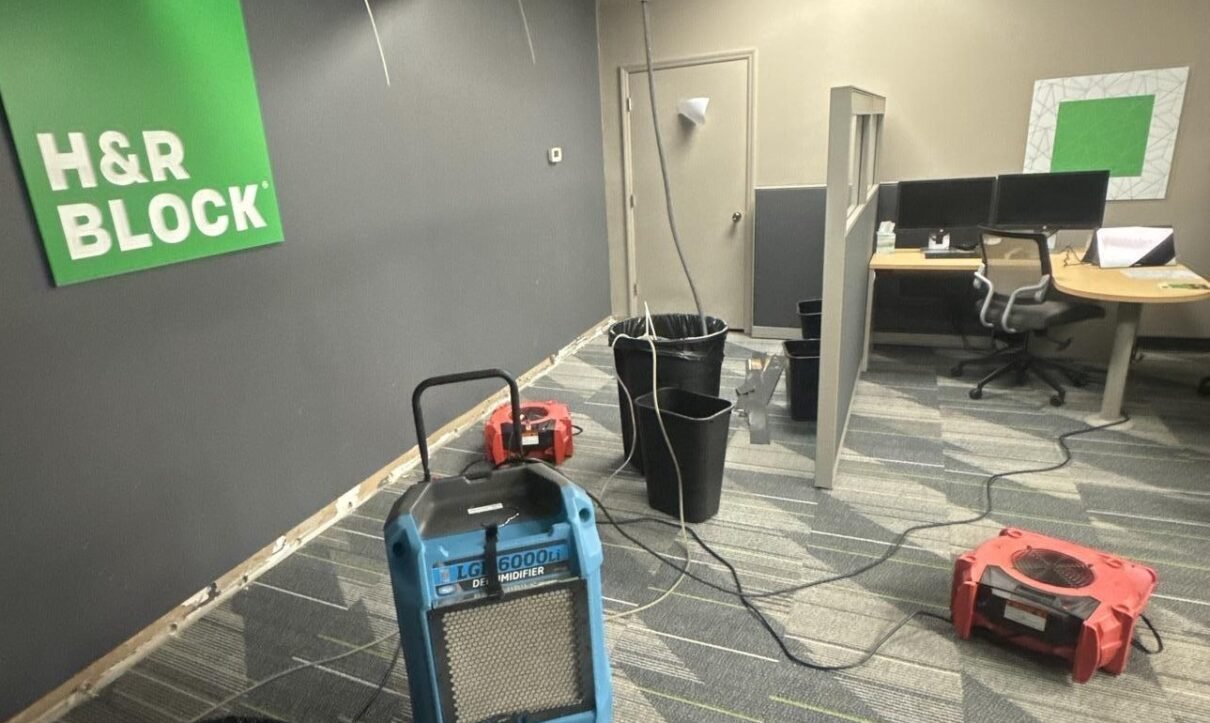
Water damage in an office building is rarely just a surface-level issue. What may appear as a small leak or minor intrusion can quickly evolve into a widespread problem affecting multiple systems within the building. Office environments are filled with hidden cavities, drop ceilings, insulation, and interconnected plumbing and HVAC systems.
Because of this complexity, water often spreads unnoticed. By the time visible damage appears, it has likely already impacted structural materials, air quality, and valuable business assets. This is why office water damage requires a faster and more strategic response than many people initially expect.
Common Causes of Office Building Water Damage in St. Louis
Office buildings across St. Louis face a range of water damage risks, many of which are unpredictable. Common causes include burst pipes during winter freezes, roof leaks after heavy storms, and HVAC system malfunctions. Plumbing failures in restrooms and breakrooms are also frequent sources of water intrusion.
In older buildings, aging infrastructure increases the likelihood of leaks, while in newer buildings, system failures or installation issues can still lead to unexpected water damage. Understanding these risks is the first step toward minimizing long-term damage.
Why Fast Response Matters in Commercial Water Damage Restoration
Time is the most critical factor when dealing with water damage. Within the first 24 to 48 hours, moisture begins to penetrate deeper into building materials. Drywall softens, insulation becomes saturated, and flooring can start to warp.
A rapid response helps limit the spread of moisture and significantly reduces the potential for secondary damage such as mold growth. This is why professional restoration services emphasize immediate action, often with 24/7 emergency availability to address issues as soon as they occur.
The Hidden Damage Water Can Cause Inside an Office Building
Water damage is rarely confined to the visible areas. Behind walls and above ceilings, moisture can travel through insulation, framing, and wiring pathways.
This hidden damage can weaken structural components, damage electrical systems, and create conditions that lead to long-term deterioration. Flooring materials, especially carpet and subflooring, are particularly vulnerable. Even after surface drying, moisture can remain trapped underneath, leading to further complications if not properly addressed.
How Water Damage Impacts Employees, Tenants, and Daily Operations
An office building is a hub of activity, and any disruption can have immediate consequences. Water damage can force temporary closures, interrupt workflows, and displace employees or tenants.
Beyond operational issues, there are also safety concerns. Wet floors, compromised ceilings, and electrical hazards can create dangerous conditions. Additionally, visible damage or unpleasant odors can negatively impact the perception of the business by clients and visitors.
Signs Your Office Building May Have More Water Damage Than You Can See
Not all water damage is obvious. In many cases, the earliest warning signs are subtle. Musty odors, discoloration on walls or ceilings, and unexplained humidity are often indicators of hidden moisture.
Warped flooring, bubbling paint, and recurring stains are also signs that water has penetrated deeper into the structure. Identifying these early can help prevent more extensive damage.
The Risk of Mold After Office Water Damage
Moisture that is not properly removed creates an ideal environment for mold growth. In commercial settings, this can quickly become a serious issue affecting both health and building integrity.
Mold can begin forming within a short period after water exposure, particularly in warm, enclosed areas. This makes thorough drying and proper remediation essential in any office water damage situation.
What to Do Immediately After Water Damage Happens in an Office Building
When water damage occurs, taking the right steps immediately can make a significant difference. The first priority is to stop the source of water if it is safe to do so.
Next, affected areas should be secured to prevent accidents. Electrical systems in impacted zones should be shut off if necessary. Documenting the damage is also important for insurance purposes.
Most importantly, contacting a professional restoration company as soon as possible ensures that the situation is handled quickly and correctly.
What Professional Office Water Damage Restoration Typically Includes
A comprehensive restoration process begins with a detailed inspection and assessment. From there, water extraction is performed using specialized equipment to remove standing water.
Drying and dehumidification follow, targeting both visible and hidden moisture. Advanced tools are often used to track moisture levels within walls and flooring.
Cleaning and sanitization are also critical steps, ensuring that the environment is safe for occupants. In many cases, restoration services may also include recommendations for repairs or additional cleaning services.
Why Office Buildings Need a Different Restoration Approach Than Homes
Commercial properties require a more complex approach than residential spaces. Office buildings are larger, have more intricate systems, and often contain sensitive equipment and data.
Restoration efforts must also consider business continuity. Minimizing downtime and allowing operations to resume as quickly as possible is a key priority. This requires careful planning and coordination throughout the restoration process.
Water Damage Restoration for Multi-Tenant and Managed Office Properties
Multi-tenant buildings present unique challenges. Property managers must coordinate with multiple businesses while ensuring that shared spaces remain safe and functional.
Communication becomes essential during restoration. Keeping tenants informed and minimizing disruption to common areas helps maintain a sense of normalcy during the process.
How Professional Drying Helps Protect Indoor Air Quality
Water damage can significantly impact indoor air quality. Moisture trapped in building materials can lead to the circulation of contaminants through HVAC systems.
Professional drying helps eliminate these risks by removing moisture at the source. This not only protects the building but also supports a healthier environment for employees and visitors.
Office Building Materials That Often Need Special Attention After Water Damage
Certain materials are more susceptible to water damage than others. Carpet and padding can absorb large amounts of moisture, while drywall and insulation can deteriorate quickly.
Ceiling tiles often show visible signs of damage, but they can also hide moisture above them. Upholstered furniture and office equipment may also require specialized cleaning or restoration.
How St. Louis Weather and Aging Buildings Can Increase Water Damage Risk
St. Louis weather can contribute to water damage through heavy rainfall, storms, and freezing temperatures. These conditions can stress building systems and lead to leaks or failures.
Older buildings in the area may also have outdated plumbing or roofing systems, increasing the likelihood of water intrusion.
The Role of 24/7 Emergency Response in Commercial Restoration
Water damage does not follow a schedule. It can happen overnight, during weekends, or at the most inconvenient times.
Having access to 24/7 emergency response ensures that restoration can begin immediately. This reduces the extent of damage and helps businesses recover more quickly. This level of responsiveness is a core part of how we approach commercial restoration projects.
What Business Owners Should Look for in a Water Damage Restoration Company
Choosing the right restoration partner is critical. Business owners should look for experience with commercial properties, fast response times, and properly trained technicians.
Clear communication and transparent pricing are also important. A reliable company should be able to handle both the immediate emergency and any follow-up services required.
Why Local Experience Matters for Office Building Water Damage in St. Louis, MO
Local experience brings valuable insight into the specific challenges faced by St. Louis businesses. Familiarity with the area’s weather patterns, building types, and commercial needs allows for a more effective response.
As a locally owned company serving St. Louis since 1991, we have worked with a wide range of commercial properties and understand what it takes to restore them efficiently and professionally.
Additional Services That May Help After Office Water Damage
Water damage often leads to other concerns that require attention. Carpet cleaning, air duct cleaning, and hard surface cleaning can all play a role in restoring the building to its original condition.
Services such as air duct cleaning are particularly important when contaminants have circulated through the HVAC system, as they help improve indoor air quality and system efficiency.
Questions to Ask Before Hiring a Commercial Water Damage Restoration Company
Before selecting a restoration company, it is helpful to ask a few key questions. These might include how quickly they can respond, what types of equipment they use, and whether they have experience with office buildings.
Understanding their process and capabilities ensures that you are making an informed decision during a stressful situation.
How to Reduce the Chances of Future Office Water Damage
Preventative measures can help reduce the likelihood of future water damage. Regular inspections of plumbing, roofing, and HVAC systems are essential.
Addressing minor leaks quickly and maintaining proper drainage systems can also make a significant difference. Having a plan in place for emergencies ensures that you are prepared if something does happen.
Why Preparation Is Just as Important as Restoration
Preparation can often determine how effectively a water damage situation is handled. Establishing a relationship with a restoration provider before an emergency occurs allows for a faster response when needed.
Having a clear internal plan for employees and property managers also helps streamline the process.
Final Thoughts: Getting Office Buildings Back to Business After Water Damage
Water damage in an office building can feel overwhelming, but with the right approach, recovery is entirely manageable. Acting quickly, addressing hidden moisture, and working with experienced professionals are all key factors in restoring a property.
If your office building experiences water damage, having a trusted team ready to respond can make all the difference. For immediate assistance or to plan ahead, you can reach out to our team here:
https://stlouiscleaningandrestoration.com/contact/
With the right support, your building can be restored efficiently, allowing your business to get back to normal with minimal disruption.